



By Reporter | Business Express
The Bank of Uganda (BoU) has revealed that commercial banks and participating financial institutions have disbursed a cumulative Shs1.23 trillion to agribusiness enterprises under the Agricultural Credit Facility (ACF) since its launch in 2009.
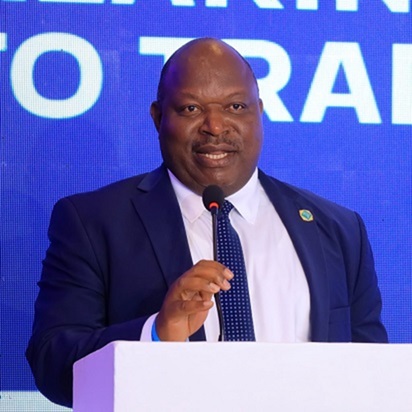
Richard Byarugaba, BoU’s Executive Director for Finance, announced the figures while representing the Deputy Governor at The Global Influence Club event held at Sheraton Kampala Hotel on Tuesday, July 29, 2025. The forum, themed “Breaking Barriers to Trade” for women entrepreneurs, brought together policymakers, financial sector leaders, and business executives.
According to Byarugaba, by June 2025 the ACF had supported 7,666 beneficiaries nationwide. Loans issued under the scheme carry a capped interest rate of 12% per annum, improving access to affordable credit within the agriculture sector.
He noted that the facility has enabled farmers and agribusinesses to invest in mechanisation, irrigation, and post-harvest handling equipment, as well as climate-smart agricultural practices. Funding has also supported access to quality inputs, improved livestock breeds, and agro-processing ventures aimed at increasing productivity and value addition.
Byarugaba highlighted the scheme’s strong financial performance, revealing a non-performing loan (NPL) ratio of just 0.5% of the total government contribution disbursed as of June 30, 2025—well below the broader agriculture sector NPL rate of 3.9%. He said this demonstrates the viability and repayment strength of ACF-backed projects.
Beyond primary agriculture, the facility has extended financing to agro-processors and grain traders, strengthening Uganda’s agricultural value chains and expanding market access.
Addressing the broader issue of trade, Byarugaba emphasised the importance of cross-border commerce in promoting specialisation, efficient resource allocation, and access to diverse goods and services. He described trade as a critical engine of economic growth and development.
He underscored BoU’s role in supporting trade competitiveness by maintaining monetary and financial stability. Through prudent monetary policy, exchange rate management, and efficient payment systems, the central bank ensures a stable environment that attracts private investment and facilitates smooth international transactions.
However, he acknowledged persistent challenges facing businesses. Globally, geopolitical tensions, complex customs procedures, rising input costs, limited access to affordable finance, and competition from substandard imports continue to constrain trade growth. Domestically, gaps in transport and communications infrastructure increase transaction costs and limit market integration.
These challenges, he said, disproportionately affect vulnerable groups such as women, youth, informal traders, SMEs, and smallholder farmers. Many face limited access to capital, information, and markets, as well as exposure to discrimination and exploitation. Climate-related shocks—including droughts and floods—further compound the risks, particularly for agriculture-dependent households.
To address these barriers, Byarugaba called for inclusive trade policies that protect vulnerable groups and expand access to affordable financing and trade information. He stressed the importance of skills development to enhance productivity and competitiveness.
He also urged investment in climate-smart and sustainable agricultural practices to strengthen resilience, alongside deeper regional integration supported by improved transport, communication, and energy infrastructure to reduce the cost of doing business.
As Uganda works to unlock its trade potential, the Agricultural Credit Facility stands out as a key instrument in expanding agricultural finance, strengthening value chains, and promoting inclusive economic growth.