



By Dennis Agaba
Nigeria’s Senate is considering trimming the proposed N58.472 trillion 2026 budget, raising concerns that the revenue projections behind it may be too ambitious to sustain.
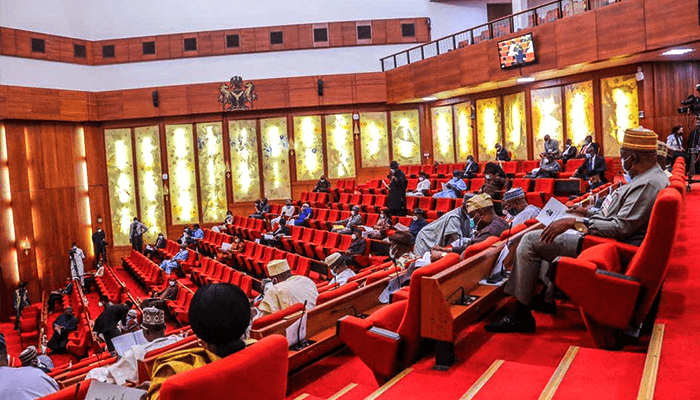
The warning came during a tense meeting between members of the Senate Committee on Appropriations and the federal government’s economic team. Lawmakers openly questioned whether the country can realistically generate the funds needed to finance the spending plan without deepening its debt burden.
At the centre of the debate was the gap between projected revenues—especially from oil—and actual performance in recent years. Senators argued that approving a budget built on uncertain assumptions could leave the government struggling to fund critical projects while borrowing more to plug the shortfall.
Finance and Coordinating Minister of the Economy, Wale Edun, faced tough questions as he explained that funding for capital projects under the 2024 and 2025 budgets was still ongoing. His assurances, however, did not fully satisfy the committee.
Zacch Adedeji, Chairman of the Nigeria Revenue Service (NRS), acknowledged the challenges, pointing out that unrealistic projections often lead to poor budget execution.
According to him, budgeting should be guided by what can realistically be raised. Planning to spend money that may never come in, he warned, creates serious financial strain when revenues fall short.
But Senator Solomon Adeola, who chairs the committee, reminded officials that the figures being scrutinised originated from the executive arm of government.
“These projections didn’t come from the legislature,” Adeola said. “There’s a wide gap between what was projected in oil revenue and what was actually realised. So we must ask ourselves—do we adjust the budget now, or do we move ahead and risk increasing our debt further?”
He suggested that selling off certain government assets to reduce debt could help ease borrowing pressures and lower future interest costs.
In response, Minister of State for Finance Doris Uzoka-Anite assured lawmakers that outstanding capital projects under the 2024 and 2025 budgets would be funded before the March 31, 2026 deadline. She said payments for delayed 2024 projects were set to begin immediately, adding that Ministries, Departments and Agencies had been directed to submit their cash plans so that 2025 disbursements could commence.
“We are ready to move forward,” she told the committee, noting that the government’s financial management system is now fully operational.
After the public exchange, senators and members of the economic team retreated into a closed-door meeting that lasted nearly two hours. Among those present were Budget and Economic Planning Minister Atiku Bagudu and Accountant-General of the Federation Shamseldeen Ogunjimi.
The discussions could determine whether the 2026 budget is reduced before final approval. For lawmakers, the key issue remains clear: balancing development needs with fiscal discipline at a time when Nigeria’s debt levels are already under strain.