



By Racheal Nagawa
More than 1,000 Kenyans have been recruited to fight alongside Russian forces in the war in Ukraine, according to an intelligence report presented to Parliament this week. The figure is significantly higher than earlier official estimates and has stirred fresh debate over the scale of the recruitment network operating within and beyond Kenya’s borders.
Until recently, authorities had indicated that just over 200 Kenyans were believed to be involved in the conflict. The updated assessment suggests the number is far greater, raising concerns about how the recruitment was organised and who may have facilitated it.
Lawmakers were told that investigations point to an organised network linking recruitment agents with rogue state officials and suspected human trafficking syndicates. National Assembly Majority Leader Kimani Ichung’wah cited the intelligence findings in Parliament, saying the scale of deployment is far beyond what had initially been understood.
The Russian Embassy in Nairobi has denied illegally recruiting Kenyans. It has, however, maintained that Russian law allows foreign nationals to enlist voluntarily in its armed forces.
Economic vulnerability and recruitment tactics
According to the report presented to lawmakers, recruiters targeted former members of the military and police, as well as unemployed civilians. Promises of attractive pay packages appear to have played a central role. Prospective recruits were reportedly offered monthly earnings of about 350,000 Kenyan shillings, with additional bonuses running into hundreds of thousands more.
In a country where unemployment and underemployment continue to weigh heavily on young people, such offers can be difficult to ignore. Economic vulnerability has long made sections of the population susceptible to risky overseas opportunities, whether legitimate or otherwise.
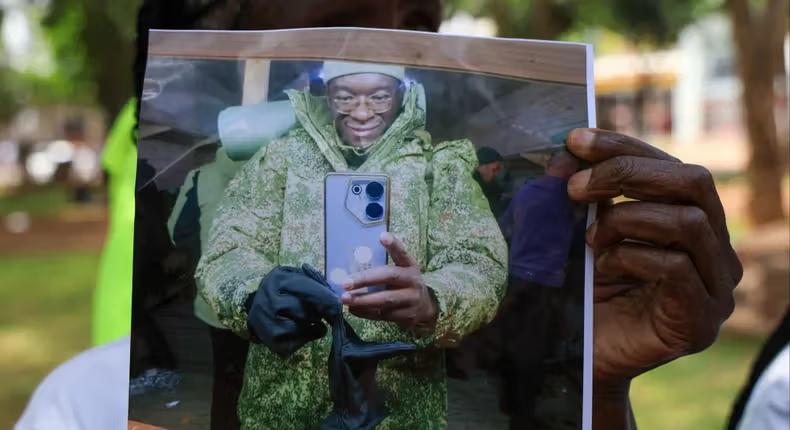
As of February 2026, the report indicated that dozens of Kenyans were believed to be on the frontline, while others were hospitalised or listed as missing. The human toll behind the statistics has begun to resonate more deeply at home as families seek answers.
Travel routes and alleged collusion
Investigators say many of those recruited travelled to Russia on tourist visas, initially passing through countries such as Turkey and the United Arab Emirates. Once scrutiny at Nairobi’s main airport increased, alternative routes reportedly emerged through Uganda, South Africa and the Democratic Republic of Congo.
The intelligence briefing alleged that certain recruitment agencies may have worked with corrupt officials, including airport and immigration staff, to facilitate travel. Authorities are now under pressure to determine the extent of any internal collusion and to close the loopholes that allowed the movement to continue undetected.
Regional implications
Kenya is not the only African country grappling with reports of its citizens joining the conflict. Governments in South Africa, Togo and Nigeria have issued warnings or launched investigations into similar recruitment claims. The issue has added a new dimension to Africa’s engagement with the ongoing war, which continues to reshape global alliances and security discussions.
For Nairobi, the matter is delicate. Kenya has positioned itself as a diplomatic voice on the international stage, including within multilateral forums. The discovery that large numbers of its citizens may be participating in a foreign war complicates that posture and raises urgent domestic policy questions.
Beyond the geopolitical implications, the episode highlights the intersection of economic hardship, migration pathways and transnational recruitment networks. As Parliament reviews the findings, attention is turning to how best to protect citizens from exploitation while addressing the economic realities that make such offers appealing in the first place.
The coming weeks are likely to see heightened scrutiny of recruitment agencies, tighter monitoring of outbound travel and deeper cooperation with regional partners. For many families, however, the priority remains far more personal: bringing their loved ones home safely.
About the Author
Racheal Nagawa is a senior reporter at Business Express Magazine with over a decade of experience covering economy, business, finance, entrepreneurship and African lifestyle across both print and electronic media.